
Himalayan Kingdoms – Nepal and Bhutan


One mountain range, two very different worlds. Nepal brings the drama, Bhutan the quiet, and you’ll want to see both.
Nepal does mountains the way they should be done. In Kathmandu, prayer wheels spin and ancient temples crowd the old royal squares. Further south, we track one-horned rhinos on safari in Chitwan National Park. Then, in Pokhara, we watch the sun rise over the Annapurna range, as the snow-capped peaks turn pink, then gold.
Bhutan is the Himalayas at a gentler pace. It’s a kingdom of forested valleys, fluttering prayer flags and whitewashed fortress-monasteries, where success is measured in Gross National Happiness rather than GDP. We explore the great dzongs of Thimphu and Punakha, then take on the hike to the Tiger’s Nest Monastery, which clings to a cliff face as if by magic.
What ties the two together is a shared Himalayan spirit: butter lamps and chanting monks, warm hospitality and mountain views at every turn. Seeing both on one journey shows you the full picture, from the highest peaks to the hidden valleys.
For curious travellers ready to go further into South Asia, and higher.
At a glance
Your itinerary
Highlights
- Explore Chitwan National Park, home to one of the last populations of single-horned Asiatic rhinoceros, on a safari and visit a local village.
- Marvel at the wonders of Nepal with a scenic boat ride across Lake Phewa and a fascinating talk from a retired Gurkha at the Gurkha Museum.
- Catch the sun rising over the Annapurna Mountains on an early morning trip to Sarangkot Hill.
- Visit to two historic dzongs: Tashichho Dzong, one of Bhutan’s most iconic landmarks and a seat of power; and Punakha Dzong, considered one of the most beautiful dzongs in the country, where all of the country’s kings have been crowned.
- Hear from local experts about Bhutan’s Gross National Happiness policy and find out why they prioritise well-being over purely economic growth.
- Hike to the legendary Tiger’s Nest Monastery, which clings to the cliff face, and enjoy a guided tour of this serene complex.
Departure
Arrive Kathmandu
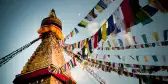
Touch down in Nepal and head to Boudhanath Stupa, to join the pilgrims circling its great white dome.
Stay at Aloft Kathmandu Thamel
Welcome to Nepal. We waste no time and head straight to Boudhanath Stupa, one of the largest stupas in the world and the spiritual heart of Kathmandu’s Tibetan community. Its vast white dome has stood here since the 14th century. From the gilded tower above, a pair of painted Buddha eyes gazes out in every direction, so you’re never quite out of sight.
Chanting drifts from the monasteries that ring the square, butter lamps flicker and the air smells of incense. Join the pilgrims walking clockwise around the stupa, a ritual known as kora, said to earn merit and purify karma. Just remember: always clockwise. Going the other way is the spiritual equivalent of driving the wrong way around a roundabout.
As you go, give the prayer wheels a spin. Each one is filled with mantras, and Tibetan Buddhists believe every turn sends those prayers out into the world. If you’re lucky, you may peek into one of the surrounding monasteries and see monks giving blessings to locals.
When you’ve done your circuit, browse the stalls of butter lamps, singing bowls and prayer flags. Then find a rooftop café, order a cup of something warm and watch the pilgrims go by below.

Kathmandu
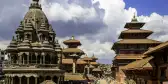
Explore Kathmandu’s Durbar Square on a guided tour, then meet a Himalayan summiteer for tales from the top of the world.
Fancy seeing Everest before breakfast? Early risers may like to book an optional scenic flight over the Himalayas. Several local operators offer flights that you can book independently in Kathmandu. Your Tour Manager can point you in the right direction.
Kathmandu
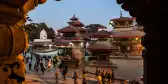
Later, we set out on a guided tour of Kathmandu’s Durbar Square. This was where the city’s kings were crowned and ruled, and it’s still the beating heart of the old town. Most of the temples, palaces and courtyards date from the 17th and 18th centuries, and the square is part of the Kathmandu Valley UNESCO World Heritage Site. The 2015 earthquake hit it hard, but skilled craftsmen have painstakingly restored its carved wooden windows and tiered pagoda roofs. Keep an eye on the Kumari Ghar, home of the Kumari, a young girl worshipped as a living goddess. If you’re lucky, she may appear at her window. Photos are strictly off-limits.
Everest talk
This evening, we meet someone who has stood where most of us only dream of going: a Sherpa or summiteer, who has climbed the great peaks of the Himalayas. They’ll share their stories from the mountains and answer all your questions, from how you train for altitude to what it actually feels like at the top of the world.

Drive to Chitwan
Swap the city for the jungle at Chitwan National Park, then meet the Tharu people on a guided walk through their village.
Stay at Jagatpur Lodge
After breakfast, we leave Kathmandu behind and drive south to Chitwan National Park. As we descend from the hills into the subtropical lowlands of the Terai, the air grows warmer and the landscape turns lush. Chitwan was Nepal’s first national park and is now a UNESCO World Heritage Site. Its forests and grasslands are home to one-horned rhinos, sloth bears, deer, crocodiles and the elusive Bengal tiger.
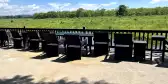
We check into our jungle lodge for two nights, staying on a full-board basis. The rooms are air-conditioned and look out over the gardens, and there’s a swimming pool for cooling off. Our favourite spot is the terrace overlooking the river and jungle. At dawn and dusk, it’s prime viewing for crocodiles and rhinos, so you may well spot your first rhino with a drink in hand.
This afternoon, we take a guided walk through a village of the Tharu people, who have lived in these forests for centuries. We walk past banana groves, fields of maize and vegetables and, depending on the season, emerald rice paddies. Along the way, we’ll see daily life carry on as it has for generations: families working the fields, cooking over open fires and tending their animals. It’s a gentle, fascinating insight into one of Nepal’s oldest communities.

Chitwan
Glide down the Rapti River by canoe to a crocodile breeding centre, then track rhinos on a 4x4 safari with an expert naturalist.
After an early breakfast, we head into the jungle and step aboard dugout canoes, each carved from a single tree trunk, for a gentle ride down the Rapti River. Look out for kingfishers darting across the water, storks wading in the shallows and crocodiles basking on the banks. It’s a good morning to keep your hands inside the boat.
Crocodile breeding centre
We step ashore at the crocodile breeding centre, a conservation project working to save the gharial crocodile. This critically endangered crocodile, with its long, slender snout, lives almost entirely on fish. Its eggs are vulnerable to predators and poachers in the wild, so they’re hatched here and the young are reared until they’re big enough to fend for themselves. Then they’re released back into Chitwan’s rivers.
Game drive
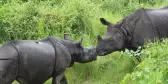
We return to the lodge for lunch and some downtime before this afternoon’s safari. Climbing aboard specially adapted 4x4s, we head deep into the park with an expert local naturalist. They’ll help us spot one-horned rhinos, wild boar, deer and, if luck is on our side, a tiger. They’ll also explain how this fragile ecosystem works, and why Chitwan’s rhino numbers are one of conservation’s great success stories.
Back at the lodge, our naturalist rounds off the day with a talk on the park’s wildlife, so bring your burning questions.

Drive to Pokhara
Travel north to lakeside Pokhara and drift across Lake Phewa by boat, with the Annapurna peaks reflected in the water.

Stay at Fish Tail Lodge Pokhara
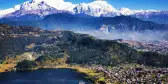
This morning, we head north by coach to Pokhara, on the shores of Lake Phewa with the Annapurna range rising behind. It’s Nepal’s second-largest city but has none of the capital’s bustle. Think lakeside cafés, swaying palms and mountain views at every turn. We arrive in time for lunch, check into our hotel and enjoy a few hours at leisure.
Boat ride on Lake Phew
This afternoon, we take to the water in colourful wooden boats. Out on the lake, the city noise fades until all you can hear is the dip of the oars and birdsong from the shore. On a clear day, the snowy peaks are mirrored perfectly in the still water. Look out for Machhapuchhre, the “Fish Tail” mountain. It’s sacred to local people, and climbing to its summit is forbidden, so it’s never officially been conquered. Some things are better admired from a distance.

Pokhara
Watch the sun rise over the Annapurnas from Sarangkot Hill, then hear the remarkable story of the Gurkhas at the Gurkha Museum.
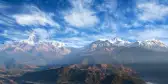
It’s an early start, and well worth it. We head up Sarangkot Hill in the pre-dawn dark to watch the sun rise over the Annapurna range. As the first light touches the summits, the peaks glow pink, then gold, while the valley below is still in shadow. Bring a warm layer, and your camera.
Gurkha Museum
After breakfast, we visit the Gurkha Museum. For more than 200 years, Nepal’s Gurkha soldiers have served in the British Army, earning a reputation for courage summed up in their motto: “Better to die than be a coward.” Pokhara is home to the British Army’s Gurkha recruitment centre and to many former soldiers. Through photographs, uniforms and medals, the museum tells their story, including the Gurkhas awarded the Victoria Cross, Britain’s highest military honour for bravery. Best of all, we’ll hear from a retired Gurkha, who will share his own experiences of life in the regiment.
Free afternoon
The afternoon is yours. Relax at the hotel, or browse Pokhara’s markets for pashminas, singing bowls, jewellery and spices. You’ll even find the famous khukuri, the curved Gurkha knife.

Pokhara to Kathmandu
Wind back to Kathmandu along the Prithvi Highway with lunch at a local restaurant on the way.
Stay at Aloft Kathmandu Thamel
Today's journey is slightly longer than usual – around six to seven hours on the road. But this is one of those journeys where getting there is half the fun.
We follow the Prithvi Highway, named after the king who unified Nepal in the 18th century. It winds through the hills past neat rice terraces and pine-clad ridges, with the occasional glimpse of snowy peaks on the horizon.
Life on the road goes on at its own unhurried pace. Children walk to school, farmers work their terraced fields, and roadside stalls sell tea, fresh fruit and river fish to passing travellers. It’s the everyday Nepal that never makes the guidebooks.
We’ll stop regularly to stretch our legs, and lunch is included at a local restaurant along the way. We arrive in Kathmandu in time to relax before dinner.

Kathmandu to Thimphu
Fly over the Himalayas into Bhutan, tour the grand Tashichho Dzong in Thimphu and discover the secrets of Gross National Happiness.
Fly to Paro
It’s an early start for our flight to Paro, and the journey is a highlight in itself. Here’s a tip: grab a seat on the left side of the plane. On a clear day, you may spot Everest on the horizon. The landing is unforgettable too. Paro sits in a narrow valley ringed by peaks, and only a handful of pilots in the world are qualified to fly in.
Tashichho Dzong
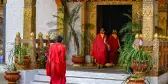
From Paro, we drive to Thimphu, a capital city with no traffic lights. A white-gloved policeman directs traffic at the main junction instead. After lunch at a local restaurant, we visit Tashichho Dzong, the magnificent fortress-monastery on the banks of the Wang Chhu River. With its whitewashed walls and red and gold roofs, it’s both the seat of Bhutan’s government and the summer home of its central monk body.
The king’s offices and throne room are closed to visitors, but we enter through the northern gate into the monastic quarters. Inside, murals show guardian kings and Drukpa Kunley, the “Divine Madman". A vast courtyard surrounds the central tower, and we visit the main assembly hall, home to a great golden Buddha and the royal thrones. Please note that a modest dress code applies at dzongs, so cover shoulders and knees, and pack long sleeves for today.
Gross National Happiness talk
Before dinner this evening, we meet a local expert to hear about Gross National Happiness. In the 1970s, Bhutan’s fourth king declared it more important than Gross National Product. Today, wellbeing, culture and the environment still guide every government decision. It may make you look at your own to-do list a little differently.

Punaka
Cross the Dochu La Pass to Punakha Dzong, Bhutan’s most beautiful fortress.
This morning, we leave Thimphu and climb to the Dochu La Pass, more than 3,000 metres up. Here, 108 memorial chortens crown the ridge, strung with prayer flags. On a clear day, the snow-capped peaks of the eastern Himalayas line the horizon.
Punakha Dong
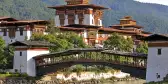
Then we descend into the lush Punakha Valley, where Punakha Dzong sits at the meeting point of two rivers, the Pho Chhu and the Mo Chhu, known locally as the “father” and “mother” rivers. Built in the 1630s, it’s often called the most beautiful dzong in Bhutan, and it’s easy to see why. Whitewashed walls rise to tiered golden roofs, arched windows are framed in carved wood, and a covered wooden bridge carries you across the river to the gates. This is where Bhutan’s first king was crowned in 1907, and where the current king married his queen in 2011. Inside, courtyards glow with intricate murals, and maroon-robed monks go quietly about their day.
Chimi Lhakhang
Next, we walk through a patchwork of fields, planted with rice, wheat or vegetables depending on the season, to Chimi Lhakhang. This little temple honours Drukpa Kunley, the “Divine Madman”. He was a 15th-century saint known for teaching through humour, song and some decidedly unorthodox methods. Couples travel from across Bhutan to receive his blessing of fertility.
We return to Thimphu, with the rest of the day at leisure.

Thimphu & Paro
Discover Thimphu’s great landmarks, then explore Bhutan’s craft traditions before travelling on to Paro.
Memorial Chorten
After breakfast, we visit Thimphu’s Memorial Chorten, a place of worship and a monument to Bhutan’s third king, Jigme Dorji Wangchuck, revered as the father of modern Bhutan. Its golden spires, carvings and murals catch the morning light. Inside, statues and paintings honour the king’s legacy and the Buddhist faith that shaped his country.
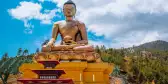
Next, a landmark you really can’t miss. The giant Buddha Dordenma statue sits high above the city, gilded in gold and visible from almost everywhere in Thimphu. Completed in 2015, it was built, it’s said, to fulfil an ancient prophecy and bring peace and happiness to the world. No pressure, then.
Royal Textile Museum
Then it’s on to the Royal Textile Museum, where weaving and embroidery are celebrated as national arts. Among the exhibits are the wedding clothes of the fourth king and his four queens, displayed alongside the everyday dress of Bhutanese men and women. It’s a fascinating contrast, and a reminder that in Bhutan, what you wear still matters.
We finish at the Craft Bazaar on Norzin Lam, one of Thimphu’s main streets. Its 80 or so stalls are full of handwoven scarves, carved masks, handmade paper and traditional jewellery. It’s the place to find a souvenir with a story, while supporting local artisans.
Later, we drive to Paro for a three-night stay.

Paro
Explore the treasures of Bhutan’s National Museum, sample local snacks at the market, then enjoy a farmhouse lunch and try your hand at archery.
Ta Dzong National Museum
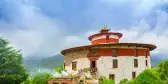
Our exploration of Paro begins high above the town at the Ta Dzong. This watchtower was originally built to protect the Rinpung Dzong below from invaders. Today it’s the National Museum, home to more than 3,000 artefacts spanning 1,500 years. Here, magic and science sit happily side by side. You’ll see ancient relics uncovered by Bhutan’s “treasure finders”, a ritual dagger said to have belonged to the protector deity Dorje Lekpa and, our favourite, a stone egg allegedly laid by a mule. We’ll let you make up your own mind.
Farmhouse lunch
Next, we head to a local market for a crash course in Bhutanese produce. Look out for khoo, squares of dried jellied cow skin eaten as a snack, and fresh betel nut, imported from India in its bright orange husk. Brave tasters are always welcome.
Then we head out to a traditional farmhouse for a home-cooked Bhutanese lunch. Afterwards, you can try your hand at archery, Bhutan’s national sport. Just don’t expect to beat the locals.
The rest of the afternoon is at leisure back at our hotel in Paro. Put your feet up and save your energy, because tomorrow we’re climbing to the Tiger’s Nest.

Tiger’s Nest Monastery
Hike to the legendary Tiger’s Nest Monastery for a guided tour, then celebrate our last night in Bhutan with a cultural show.
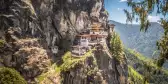
Today is the one you’ve been waiting for: a pilgrimage to Taktsang Goemba, better known as the Tiger’s Nest. Clinging to a cliff high above the Paro Valley, it’s Bhutan’s most sacred Buddhist site. Legend has it that Guru Rinpoche, the 8th-century sage who brought Buddhism to Bhutan, flew here on the back of a tigress to meditate in a cave on this very spot.
There’s no road and no cable car. The only way up is on foot. The hike takes around two and a half hours along a steep, rough but well-trodden path, climbing about 550 metres (1,800 feet) through pine forest strung with prayer flags. Halfway up, we stop for a breather at the café, with views across to the monastery. Then comes the final zigzag along the cliff edge, and the Tiger’s Nest appears in full view. It’s a sight that makes every step worthwhile.
At the top, our guide leads us through the monastery complex. We visit the sacred Drubkhang cave, where Guru Rinpoche is said to have meditated for three months, and see the inner sanctum behind its gilded doors, surrounded by murals of his eight manifestations. We climb through chapels filled with relics, carvings and a holy spring, and even descend steep wooden ladders into the original Tiger’s Nest cave.
Before you leave, look for the relic stone near the entrance. Pilgrims stand at a marked spot, close their eyes and try to put their thumb into a small hole in the rock, said to hide a treasure left by Guru Rinpoche. Find it first time and your karma is in good shape.
On the way back down, we stop at the café for a well-earned lunch, then return to the hotel for an afternoon at leisure.
Cultural show
To mark our last night in Bhutan, we enjoy a cultural show at the hotel, a colourful evening of traditional music, folk dances and masked dances. At the end, you’re welcome to join in a folk dance. After today’s climb, we think you’ve earned your place on the dance floor.

Paro to Kathmandu
Fly back to Kathmandu for a free afternoon, then celebrate the journey with a six-course farewell dinner of Nepalese flavours.
Stay at Aloft Kathmandu Thamel
After an early morning flight from Paro, we land back in Kathmandu with the rest of the day to spend as you like. Rest those hard-working legs, revisit a favourite corner of the city or simply sit back and take it all in.
This evening, we come together one last time for dinner at the hotel. It’s a chance to swap stories, from Chitwan’s rhinos to the Tiger’s Nest. Raise a glass to two kingdoms, one mountain range and a group of fellow travellers who are now firm friends.

Depart Kathmandu
Bid farewell to Kathmandu and fly home on an overnight flight, leaving the peaks behind but taking a little Himalayan calm with you.
Arrive home
Hand-picked hotels

Kathmandu, Nepal
The Aloft Hotel offers a comfortable and modern stay in the Nepalese capital, Kathmandu.

Chitwan, Nepal
Jagatpur Lodge offers a comfortable a relaxing stay at the edge of Chitwan National Park.

Pokhara, Nepal
The beautifully situated Fish Tail Lodge offers breathtaking views of Lake Phewa.

Thimphu, Bhutan
Chosen for its convenient location, the Le Meridien offers a comfortable stay in Thimphu.

Extras & upgrades
Opt for a convenient door-to-door service with transport from your home to your choice of regional airport or train station, available as an added optional with every holiday. This can be added to your booking after you've booked online by giving our reservations team a call, or when you're booking over the phone.
From hotel upgrades to holiday extensions, you can benefit from our Travel Concierge service:
- Add hotel stays before your tour in the destination your tour starts in
- Add hotel stays after your tour in the destination your tour ends in
- Change your departure airport (depending on flight availability)
- Upgrade your flight
- Book a door-to-door transfer service from your home to your departure airport or airport hotel
- Add transfers to and/or from the airport to your hotel
Available pre and post booking.
Travel connections
| Arrival airport | First hotel location | Transfer time | Final hotel location | Departure airport | Transfer time |
|---|---|---|---|---|---|
| Kathmandu | Kathmandu | 45 mins | Kathmandu | Kathmandu | 45 mins |
FAQs
For a limited time, secure your holiday with just a £99pp deposit on 2027 and 2028 departures, reduced from £500pp. The remaining balance is due a minimum of 90 days before departure.
The price of this holiday is per person, based on two people sharing a twin room. Price includes:
- 13 nights accommodation in four to five-star hand-picked hotels
- 18 included experiences
- Daily breakfast, 6 lunches & 13 dinners
- Return flights and transfers
- All additional taxes
- The services of a Riviera Travel Tour Manager
- Average group size of 12-25 guests
- A local guide on most guided tours
- Governmental Sustainable Development Fee for Bhutan
- Bhutan Visa Fee
Along with a valid passport, UK Citizens require a visa to enter Nepal. For the most up-to-date passport and visa information visit:
Entry requirements - Nepal travel advice - GOV.UK
A visa is required for Bhutan, but we arrange this for you and the cost is included in the price of your holiday.
- Currency: Nepalese rupee (Nepal), Bhutanese Ngultrum (Bhutan)
- Flight Time: approx. 12.5 hours Nepal to UK
- Language: Nepali, Dzongkha
- Time Zone: GMT+5:45 (Nepal), GMT+6 (Bhutan)
- Country: Nepal & Bhutan
Find your departure
Travel summary
- Departing during:
- January 2029 - December 2029
- Transport type:
- Any
- Departing from:
- Any
- Guests & rooms:
- 2 guests ,
- 1 room
Selecting price display and sort by options will update the results displayed below automatically.