
Heritage India: Agra, Varanasi and Darjeeling


The India most people don’t get to see. From sacred sunrises on the Ganges to tea in the Himalayan foothills, it’s worth the journey.
We begin in Delhi and Agra, where the Taj Mahal is every bit as remarkable as people promise. Whether it’s your first look or your second, it earns it. Then the journey goes deeper. In Varanasi, one of the oldest continuously inhabited cities on earth, faith and daily life play out side by side on the ghats of the Ganges, just as they have for thousands of years.
Next comes Kolkata, once the capital of British India. Grand colonial buildings stand over flower markets, hand-pulled rickshaws and some of the best street food in the country.
Finally, the air cools as we climb into the Himalayan foothills to Darjeeling. We’ll walk through working tea estates (a cup or two is only polite) and ride the UNESCO-listed Toy Train as it loops and zigzags up the mountainside.
This one’s for travellers who’ve seen India once and suspect there’s a lot more to it. They’re right.
At a glance
Your itinerary
Highlights
- Catch the sun rising over the Taj Mahal in the early morning light and you'll have plenty of time to marvel at it from all angles on a guided tour.
- Rise in the early morning for a boat ride to witness the breathtaking sunrise over the Ganges.
- Step into the world of tea at the Glenburn Tea Estate for a guided tour to find out how the humble tea leaf is transformed into the perfect cup before lunch in this scenic locale.
- Ride the Darjeeling Himalayan Railway - affectionally known as the Toy Train - transformed north Bengal's sleepy hill economy, giving rise to new villages, tea estates and residential schools.
Departure
Arrive in Delhi
Touch down in Delhi and go straight to the soaring Qutub Minar, before an afternoon to settle in.

Stay at Le Meridien Hotel - New Delhi
Welcome to Delhi. We’re going straight to one of the city’s great sights: the Qutub Minar. Work began on this towering sandstone minaret in the late 12th century, and at 73 metres it’s still the tallest brick minaret in the world. Its carved bands of calligraphy are worth craning your neck for.
On the way to our hotel, we’ll pass India Gate and the grand President’s House, both part of Edwin Lutyens’ imperial vision for New Delhi. It’s a first glimpse of the British legacy we’ll uncover as the journey goes on.
We check in this afternoon. The rest of the day is yours, whether that means a nap, a wander or a well-earned cup of chai.

Delhi & Agra
Tour Old Delhi with the people who know it best, then enjoy a rickshaw through the spice bazaars before we drive on to Agra.
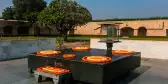
Raj Ghat
We start the morning somewhere quiet. Raj Ghat is a peaceful park on the banks of the Yamuna River, where Mahatma Gandhi was cremated after his assassination in 1948. A simple black marble platform marks the spot, inscribed with what are said to be his final words: Hé Ram (“Oh, God”). For a man of such influence, it’s a fittingly modest memorial.
Old Delhi
Next, Old Delhi, and our guides here aren’t your usual guides. They’re young people from the Salaam Baalak Trust, a charity that has supported Delhi’s street children for more than 30 years, and some of them grew up on these very streets. As they lead us through the lanes of the old walled city, they share tales of the Mughal emperors alongside their own stories of life in Delhi today. It’s history and the present day on the same walk.
Rickshaw ride
Then we hop aboard a cycle rickshaw and weave through the bazaars. Expect sacks of chillies, towers of saffron and the sizzle of street food from every corner. Keep your camera handy, and your elbows tucked in.
This afternoon, we say goodbye to Delhi and drive to Agra, ready for an early start tomorrow. Trust us, it’s worth it.

Agra
Watch the Taj Mahal at sunrise on a guided visit, then discover the Agra Fort, where its creator spent his final years.
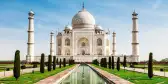
Taj Mahal
It’s an early start, and you’ll be glad of it. We arrive at the Taj Mahal as the sun comes up, when the mist is still lifting off the Yamuna River and the white marble turns soft pink, then gold. The emperor Shah Jahan built it as a tomb for his beloved wife, Mumtaz Mahal. It took around 20,000 craftsmen more than 20 years. Every inlaid flower, every line of calligraphy and every perfectly mirrored minaret shows the effort. On our guided tour, you’ll have plenty of time to see it from every angle, including the classic view from the long reflecting pool.
Agra Fort
Next is Agra Fort, a red sandstone stronghold completed in 1573 and once the seat of the Mughal Empire. Behind its walls you’ll find marble halls, courtyards and private palaces. It’s more royal residence than military fort. It also holds a poignant postscript to this morning: Shah Jahan spent his final years imprisoned here by his own son, gazing across the river at the Taj Mahal.
Agra’s craftspeople still carry on the city’s legacy, from marble inlay to fine embroidery. We’ll stop in the markets to browse. Agra’s leather goods are especially good, if you’re after a souvenir that lasts.
The afternoon is yours to enjoy at leisure.

Agra to Lucknow
Head east through India’s farming heartland to Lucknow, the elegant City of Nawabs, with a free afternoon on arrival.

Stay at Taj Mahal Lucknow
This morning we head east to Lucknow, capital of Uttar Pradesh. The drive takes around four and a half hours, mostly on the smooth new expressway, and the window seats are worth having. Fields of wheat, mustard and sugar cane stretch to the horizon, and village life goes on at the roadside. It’s a side of India that most visitors never see.
Lucknow was once the court of the Nawabs of Awadh, and good manners are still a point of pride here. The city is famous for pehle aap, meaning “after you”, a courtesy so ingrained that, as the joke goes, two Lucknowis once missed a train insisting the other board first. It’s a refined city of grand architecture, delicate chikankari embroidery and some of the finest cooking in India.
After we check in, the afternoon is free.

Lucknow
Discover Lucknow's royal and colonial past with visits to La Martiniere College and the British Residency to the Bara Imambara.
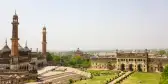
La Martiniere College
Today’s guided tour starts at La Martiniere College, built with the fortune of Claude Martin, a French soldier of fortune who made his money in the service of the East India Company and the Nawabs. Its grand architecture is a confident mix of European and Indian styles. Here’s a fact for the quiz night back home: it’s the only school in the world to have been awarded a royal battle honour, earned when its pupils and teachers helped defend the British Residency in 1857.
British Residency
That’s where we’re heading next. The British Residency was home to the British representative at the Nawabs’ court, until the Indian Rebellion turned it into the scene of the famous Siege of Lucknow. Those inside held out for months. Today its ruins still bear the marks of cannon fire, and the 1857 Memorial Museum tells the story through artefacts, maps and personal accounts.
Bara Imambara
Then we move from colonial history to royal splendour at the Bara Imambara. It was built in the 1780s as a famine relief project, giving work to thousands, and its central hall is one of the largest in the world built without supporting beams. Above it lies the Bhul Bhulaiya, a labyrinth of more than 1,000 passageways. Stay close to your guide. Nearby, we’ll see the ornate Chota Imambara and pass beneath the Rumi Darwaza, the 18th-century gateway that has become the symbol of the city.

Lucknow to Varanasi
Trade the courtly calm of Lucknow for Varanasi, one of the world’s oldest cities, on a scenic drive through rural Uttar Pradesh.
Stay at Taj Ganges Varanasi
Today's journey is slightly longer than others. The drive to Varanasi takes around five and a half hours, with two comfort stops along the way. But it’s a journey with a story to tell, from the refined world of the Nawabs to one of the most sacred cities on earth.
The Purvanchal Expressway makes light work of the first stretch. Then the scenery takes over. Wide plains of wheat, rice, sugar cane and mustard (depending on the season) are dotted with villages, temples and roadside shrines. Once we leave the expressway, the traffic gets more interesting: tractors, bullock carts and gloriously painted local buses share the road, while tea stalls and fruit sellers do brisk trade at the roadside.
Then comes the final approach, and you’ll feel the change before you see it. The roads narrow, the pace picks up, and pilgrims, cycle rickshaws, tuk-tuks and the occasional unbothered cow all converge on the holy city. Mark Twain wrote that Varanasi is “older than history, older than tradition, older even than legend”. Arriving here, you’ll see what he meant.
The rest of the day is at leisure.

Varanasi
Drift along the Ganges at sunrise, walk Varanasi’s ancient lanes, visit Sarnath and watch the Ganga Aarti from the water.
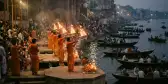
Boat ride on the Ganges
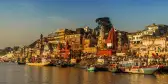
There’s no better introduction to Varanasi than drifting along the Ganges at dawn. As the sun rises over the river, the ghats come to life: pilgrims bathe in the holy water, priests begin their prayers, and the stone steps glow in the first light.
Our boat then takes us past Manikarnika Ghat, the city’s most sacred cremation ground, where funeral pyres burn day and night. Hindus believe that being cremated here brings moksha, release from the cycle of death and rebirth. It’s a deeply moving sight, and a reminder that in Varanasi, life and death live side by side. Out of respect for the mourners, photography isn’t permitted here, so this is one to take in with your own eyes.
Walking tour of Varanasi
After breakfast back at the hotel, we set out on a guided walk through the old city. Incense hangs in the air, bells ring from hidden temples and the narrow alleys are full of traders, pilgrims and the odd cow that has right of way. Your guide will show you how to read this extraordinary city.
Sarnath
Next, we visit Sarnath, one of the holiest sites in Buddhism. It was here, in the calm of the Deer Park, that the Buddha gave his first sermon after reaching enlightenment. The great Dhamek Stupa still marks the spot, more than 1,500 years after it was built.
Ganga Aarti ceremony
As night falls, we board a boat once more to watch the Ganga Aarti, a ceremony of thanks to the river goddess Ganga. Priests swing blazing brass lamps in time to chanting and bells, while thousands gather on the steps to watch. From our spot on the water, we have the best view in the house, without the crush. Afterwards, we return to the hotel in time for dinner.

Varanasi to Kolkata
Fly to Kolkata for a riverside stroll along the Hooghly, then dine above the city with an expert talk on the Story of Bengal.

After a leisurely morning, we head to the airport for our short flight to Kolkata. Until 1911, this was the capital of British India, and the city still wears its history on its sleeve.
Kolkata
This afternoon, we take a gentle walk along the Hooghly River, starting at Prinsep Ghat. This elegant Palladian pavilion was built in 1841 in memory of James Prinsep, the scholar who first deciphered the ancient Brahmi script. It’s thanks to him that we can read the inscriptions of Emperor Ashoka, including those at Sarnath, which we visited yesterday. Along the riverbank, locals gather to chat, stroll and take in the breeze, and there are fine views of the Vidyasagar Setu. When this sweeping cable-stayed bridge opened in 1992, it was the longest of its kind in India.
Our walk ends at Eden Gardens, one of the oldest and largest cricket grounds in the world. On match days, its roar can be heard streets away. Cricket here isn’t so much a sport as a religion.
Glenburn Penthouse
This evening, we’re invited to the Glenburn Penthouse, a rooftop retreat with sweeping views across the city to the Victoria Memorial. Over drinks, an expert takes us through the Story of Bengal, from Mughal riches to the Raj and beyond, before we sit down to dinner.

Kolkata
Explore Kolkata with a local guide, then visit the Victoria Memorial, the Mullik Ghat flower market and Mother Teresa’s Motherhouse.

Kolkata is loud, proud and gloriously alive. Colonial grandeur sits beside street food stalls, marigold garlands and the constant chorus of car horns. Today, an expert local guide shows us how it all fits together.
We begin in the heart of old Kolkata with a guided walk around Dalhousie Square. Locals call it BBD Bagh, after three young freedom fighters who stormed the British offices here in 1930. This was once the nerve centre of the East India Company, and the buildings still have the swagger of an empire at its peak. Highlights include the domed General Post Office and a visit inside St John’s Church, one of the city’s oldest Anglican churches.
After some free time for lunch, we visit the Victoria Memorial. Built in white marble in memory of Queen Victoria, it’s known locally as the “Taj of the Raj”. With its sweeping lawns, vast dome and galleries of paintings and artefacts, it’s the grandest reminder of Kolkata’s days as the capital of British India.
Then, for a riot of colour, we head to Mullik Ghat in the shadow of the mighty Howrah Bridge. This is one of the largest flower markets in Asia. Forget neat bouquets: here, mountains of marigolds, roses and jasmine are sold by the sackful and strung into garlands for temples, weddings and festivals. It’s a feast for the camera as much as the nose.
We end the day somewhere quieter, at the Missionaries of Charity’s Motherhouse, the final resting place of Mother Teresa, now Saint Teresa of Calcutta. Visitors of every faith come to pay their respects at her simple tomb. Upstairs, her small room is kept just as she left it. She lived and worked here from 1953 until her death in 1997, and the adjoining museum tells the story of a life given to others.

Kolkata to Darjeeling
Swap the heat of Kolkata for the cool air of Darjeeling, winding up through the Himalayan foothills to the Raj’s favourite hill station.
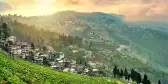
Stay at Elgin Hotel Darjeeling
This morning, we say goodbye to Kolkata and take a short flight north to Bagdogra, at the foot of the Eastern Himalayas. Then the real climb begins.
The road twists and turns, and with every hairpin bend the scenery changes. The flat, tropical plains give way to steep slopes covered in tea bushes, pine forests and prayer flags fluttering in the breeze. Notice the temperature drop as the air gets cooler and fresher. If the clouds are kind, you may even catch your first glimpse of snow-capped peaks.
Our destination is Darjeeling, perched around 6,700 feet above sea level. Its name is thought to come from the Tibetan Dorje Ling, “place of the thunderbolt”. The British came here in the 19th century to escape the summer heat of the plains, and they left their mark. Victorian villas, Gothic churches and colonial clubs sit alongside Buddhist monasteries, all with views across to Kanchenjunga, the third-highest mountain in the world.
We check into our hotel for the next three nights. Tomorrow, we explore in earnest. For now, find a window, order a pot of Darjeeling’s finest and watch the mist roll in over the hills. You’re in the right place for it.

Darjeeling
Ride the UNESCO-listed Toy Train to Ghum, then stroll Darjeeling’s colonial streets on a guided heritage walk.
Early risers, this one’s for you. Venture to a nearby Sherpa village to watch the sun rise over the Himalayas. As the first light hits the peaks, Kanchenjunga may emerge from the clouds, glowing pink, then gold. Or feel free to stay tucked up in bed, the choice is yours.
Darjeeling Himalayan Railway
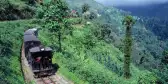
After breakfast, we climb aboard a true icon: the Darjeeling Himalayan Railway, better known as the Toy Train. Built by the British between 1879 and 1881, this little two-foot gauge railway transformed the hills, bringing new villages, tea estates and boarding schools in its wake. Today it’s a UNESCO World Heritage Site, and it’s easy to see why. As the tiny engine puffs up gradients that seem to defy physics, it zigzags past tea gardens, hillside hamlets and front doorsteps so close you could almost knock. We ride up to Ghum, one of the highest railway stations in India. On the way, we spiral around the Batasia Loop, with sweeping views back over Darjeeling to the Kanchenjunga range.
Darjeeling Himalayan Railway
After free time for lunch, we set out on a guided heritage walk. Along the Mall, the town’s hilltop promenade, you’ll find old bookshops, tea rooms and a few Raj-era landmarks. We continue to St Andrew’s Church and the Planters’ Club, where tea barons once gathered for a gin and a gossip. Stop for a moment to take in the valley below, and you’ll see why they call Darjeeling the “Queen of the Hills”.

Darjeeling Tea Estate
Discover how Darjeeling’s famous tea goes from leaf to cup on a guided tour and tasting at the family-run Glenburn Tea Estate.
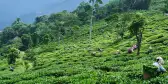
For a nation of tea drinkers, today is something of a pilgrimage.
After breakfast, we take a scenic drive through the hills to the Glenburn Tea Estate, on the banks of the Rangeet River, with the Kanchenjunga range rising behind it. With a guide, we wander through the gardens, where pickers still pluck by hand, taking just “two leaves and a bud” from each bush. Then it’s into the working factory to see how those leaves are withered, rolled, dried and sorted into the tea that ends up in your cup.
Next, a guided tasting of the estate’s black, green, oolong and white teas, each with its own colour, aroma and character. You’ll learn why Darjeeling is called “the champagne of teas”, and you may never look at a teabag in quite the same way again.
We stay on the estate for lunch, then return to our hotel for a free afternoon. There’s plenty of time to put your new expertise to good use.

Darjeeling to Kolkata
Wind back down through the tea-covered hills to Bagdogra and fly to Kolkata for a final evening in the City of Joy.

Stay at ITC Sonar Kolkata
This morning, we say goodbye to the hills and wind our way back down to Bagdogra, with one last chance to see the tea gardens and prayer flags from the window. From there, we take a short flight back to Kolkata.
After dinner at the hotel, the evening is free for a final taste of the city. Kolkata is famous for its sweet tooth, so it would be rude not to try a rosogolla, a soft, syrup-soaked cheese dumpling, or a pot of mishti doi, the city’s beloved sweetened yoghurt. Then raise a cup (of Darjeeling, naturally) to the journey.

Departure
Say goodbye to India and head to the airport for your flight home, with a suitcase full of tea and a head full of stories.
Hand-picked hotels

New Delhi, India
Chosen for its atrium glass building which is recognised as one of the ‘100 icons of Delhi'.

Agra, India.
The Grand Mercure Agra was chosen for its proximity to the Taj Mahal and five-star facilities.

Varanasi, India.
Chosen for its luxurious charm and ideal location along the banks of the Ganges.

Kolkata, West Bengal, India
Chosen for its peaceful gardens and tranquil pond—an oasis of calm after a day’s exploring.

Darjeeling, West Bengal, India
Chosen for comfort and its incredible setting with views over the hills and mountains.

Lucknow, India
A luxurious riverside retreat where Lucknow's regal heritage meets contemporary elegance.
Extras & upgrades
Opt for a convenient door-to-door service with transport from your home to your choice of regional airport or train station, available as an added optional with every holiday. This can be added to your booking after you've booked online by giving our reservations team a call, or when you're booking over the phone.
From hotel upgrades to holiday extensions, you can benefit from our Travel Concierge service:
- Add hotel stays before your tour in the destination your tour starts in
- Add hotel stays after your tour in the destination your tour ends in
- Change your departure airport (depending on flight availability)
- Upgrade your flight
- Book a door-to-door transfer service from your home to your departure airport or airport hotel
- Add transfers to and/or from the airport to your hotel
Available pre and post booking.
Travel connections
| Arrival airport | First hotel location | Transfer time | Final hotel location | Departure airport | Transfer time |
|---|---|---|---|---|---|
| Delhi | Delhi | 45 mins | Kolkata | Kolkata | 45 mins |
FAQs
The cost of a 30-day tourist e-visa is US$10 if your date of entry if from April to June, or US$25 if your date of entry is from July to March.
You must apply for your e-visa no more than 30 days before you’re due to enter India. The application takes around three working days. We recommend you apply for your e-visa two to three weeks before your arrival date in India.
Once your visa is approved, you have 30 days to enter India. Upon entry, the visa is then valid for 30 days, and it is a double entry visa.
During the application, you’ll need to submit a passport-sized photo in JPEG format and a scanned copy of your passport in PDF format.
Apply online at indianvisaonline.gov.in/evisa/
Please note: Visa costs and requirements are subject to change. Please refer to the FCO website Entry requirements - India travel advice - GOV.UK for the latest advice and information.
- Currency: Indian Rupee
- Flight Time: Approx. 8 hrs 30 mins
- Language: Hindi
- Time Zone: GMT+5.5
- Country: India
For a limited time, secure your holiday with just a £99pp deposit on 2027 and 2028 departures, reduced from £500pp. The remaining balance is due a minimum of 90 days before departure.
The price of this holiday is per person, based on two people sharing a twin room. The price includes:
- 13 nights in four to five-star hand-picked hotels
- 17 included experiences
- Return flights and transfers
- Breakfast daily + 2 lunches + 13 dinners
- Checked luggage
- Expert Riviera Tour Manager looking after you throughout
- All additional taxes
- Average group size of 12-25 guests
Find your departure
Selecting price display and sort by options will update the results displayed below automatically.